
The quiet engineering of wanting
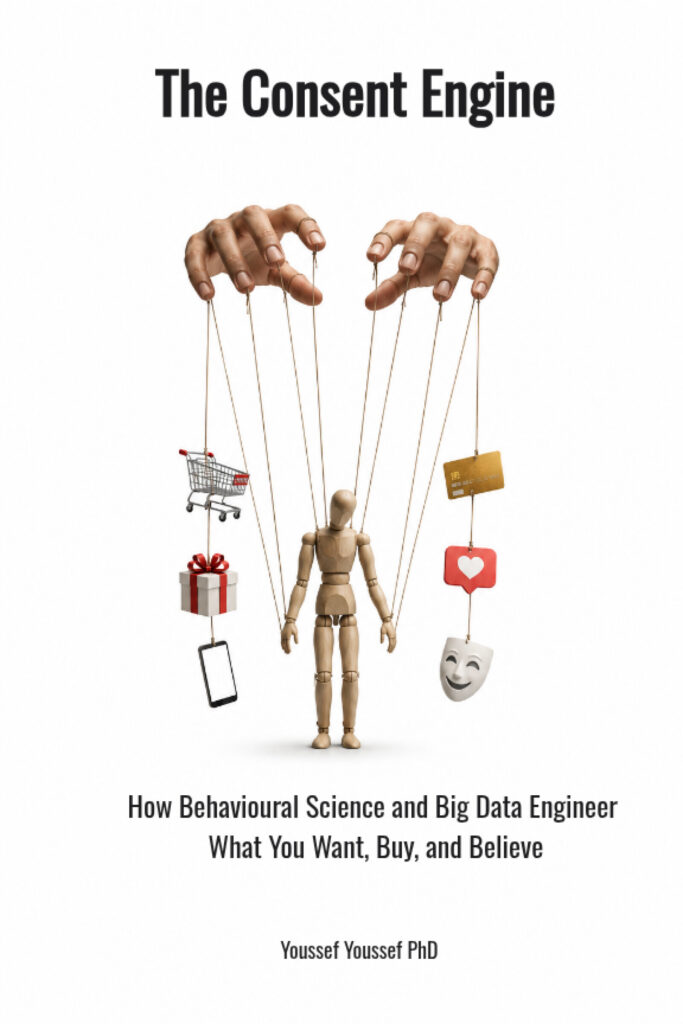
Modern life asks for consent constantly. We agree to terms, accept cookies, opt in and opt out. The ritual is meant to protect autonomy: nothing happens to us that we did not choose. But a choice is only as free as the conditions under which it is made, and those conditions are increasingly designed.
Choice architecture at scale
Behavioural science has shown in careful work that people do not choose in a vacuum. Defaults matter, the order of options matters, the framing of a loss or a gain matters. None of this is sinister in itself; every menu, form and shop has to be arranged somehow. What changes the picture is data. When the arrangement can be tested on millions of people and tuned to each one, the designer learns more about what moves us than we know ourselves.
At that point consent starts to look different. If a system knows which framing will make me say yes, and presents it to me because I am the kind of person who says yes to it, my agreement is real but no longer independent of the system asking for it. The question is not whether I clicked, but who designed the moment in which I did.
What would honest persuasion look like?
Marketing does not need to give up persuasion to be honest. It needs to accept limits that make agreement meaningful: options presented so that saying no is as easy as saying yes, defaults that serve the customer rather than the metric, and personalisation that the person could see and understand if they asked. These are not only ethical constraints. Customers who later discover how a yes was engineered tend not to come back.
For citizens the lesson is modest but useful: notice when a choice has been arranged for you, and ask who benefits from the arrangement.
The Consent Engine examines how behavioural science and big data engineer what we want, buy and believe.
Further reading: The Consent Engine: How Behavioural Science and Big Data Engineer What You Want, Buy, and Believe
Drafted with AI assistance for the Y Academy Press editors, in line with the Press's Generative AI policy.